At the recent joint council meeting Philadelphia Yearly Meeting staff shared the revised Child and Youth Safety Policy noting the guidance of leadership, reviews by others, and editing by lawyers. The policy is materially the same as before. [Read more…] about New Child and Youth Safety Policy for Philadelphia Yearly Meeting
Friends Who Care For Youth
Talking to Children about Gun Violence | Lunden Abelson | Part 2
National Gun Violence Awareness Day has taken place each June since 2015 and will be observed this year on June 5. As part of that wider conversation, last week, Melinda Wenner Bradley recently shared ways adults can approach conversations with children about guns, violence, fear, and safety. This week, Philadelphia Yearly Meeting continues to share, with the perspective of Lunden Abelson, a parent, holistic somatic trauma therapist, and healer.
Lunden Abelson is a therapist and parent whose family is part of the Moorestown Friends School community. Much of Lunden’s work focuses on people who have experienced trauma and violence. Through her private practice, Lunden works with people helping them heal and gain deeper clarity and connection with their values and beliefs. In addition to therapy Lunden offers a variety of workshops for adults, families and children. Her program, The Warren, specifically is designed to support children engage in proactive nonviolent communication.
Learn more about her work at: www.seedsofpotential.com [Read more…] about Talking to Children about Gun Violence | Lunden Abelson | Part 2
Talking to Children about Gun Violence | Melinda Wenner Bradley | Part 1
National Gun Violence Awareness Day has taken place each June since 2015 and will be observed this year on June 5. As part of that wider conversation, Melinda Wenner Bradley recently shared ways adults can approach conversations with children about guns, violence, fear, and safety. Next week, Philadelphia Yearly Meeting will also share the perspective of Lunden Abelson, a parent, holistic somatic trauma therapist, and healer.
Melinda Wenner Bradley is a member of West Chester Meeting, clerk of Concord Quarter, co-founder of the Quaker Religious Education Collaborative and Faith & Play Stories, and the parent of three young adults raised in Philadelphia Yearly Meeting. Her work has focused on children, faith formation, and helping families and meetings create places where young people can ask questions and bring forward concerns. Learn more about her ministry at: . alltogethernowfriends.com
Melinda recently shared how adults can prepare themselves for conversations with children about guns and other weapons. “The first step is to educate yourself about the issues so that you have an informed understanding of the problem and current policies.” She added, “And this won’t be a ‘one and done’ conversation with your child. You may need to come back to it over time, and educating yourself helps your responses be appropriate to your child’s development.”
She continued on the topic of preparation and said, “Because families are all different, knowing what your family stance on guns is helps you be able to respond to questions and concerns, which is different from reacting.” Preparation includes helping children understand, “this is what our family believes, and how we live that belief.” She also said, “Being able to demonstrate any level of action, whatever works for you, shares that there is hope and we have agency.”
Continuing on conversations with children, she added, “Start with reassurance that they are safe, and you are doing everything you can to keep them safe.” She continued, “You know your child. What is overwhelming to one child may be different from the curiosity of another,” and added, “Preparing ourselves is really important.”
When children bring up guns, Melinda said, “It means listen more than talk!” She continued, “We want to create spaces for them to discuss and explore both their feelings and information they may have heard.” She said, “So first is to really listen, and let them ask all their questions. Let them share and only respond to clarify or reflect back to them what you are hearing.”
She gave an example: “I think I hear you saying that you’re worried about something like this happening at your school. Is that right?” She added, “And for some children, words are not their best tool for expressing themselves. If you think something is on a child’s mind, you might also ask if they want to draw what it is. Or use a picture book and wonder about it together to open up a conversation.”
Melinda also spoke about helping adults understand what children may actually be asking. She suggested asking, “I wonder what you’re curious about? I wonder what you think about this?” She explained, “Wondering is intended to signal that there is no one correct answer; we’re being open together.” She also suggested parents say things like, “I’m wondering about that too,” and added that this can become “such a great moment of mutuality; we don’t have all the answers, but we’re going to accompany the child with their questions.”
Melinda also spoke about children bringing guns into play. She said, “Living in our society, imaginary play that includes weapons, like guns, can be expected.” She added how important it is to be very clear that real guns are not for play. Melinda also said, “Play is the really important work of children. It is how they try on identities, test ideas, and explore how things work.” We might help children connect Quaker faith to those moments when play includes violence, and ask, “What does it mean to believe in the Light, or that of God, in every person?” “How do both the testimonies of peace and community call us to be in relationship with others?”
Melinda also spoke about children noticing guns in public spaces, sports, hunting, media, and law enforcement. She said, “That’s an opportunity to have an open conversation about when and how guns are used by adults who are trained and licensed to use them, and how they are not toys.” She added that older children and youth “may be ready for a more complex conversation about community harm and the tension between protection and power that guns can represent.”
Returning to how children who may feel afraid after learning about guns or gun violence, Melinda said, “Make sure they know you are there to listen and hold this with them.” Sharing advice from Everytown for Gun Safety, she said, “Allow them to think through and process their fear of danger.” She also said, “We might also wonder what is in a child’s ‘spiritual toolbox’ for moments like this; practices like holding people in the Light, prayer, mindfulness, and breath.”
The conversation also widened to include meeting communities and support for families. Melinda asked, “How is your meeting community supporting people who are parenting?” She said, “That’s where pastoral care for children begins, and it’s the work of the meeting, not only a children’s RE committee.” She continued, “There is so much wisdom in a multigenerational community to share in ways that are mutual and reciprocal.” She also asked how meetings are prepared to include “the voices and concerns of young people” in conversations around gun violence and witness.
Melinda returned to why these conversations matter and said, “In the words of Fred Rogers, ‘If it’s mentionable, it’s manageable.’” She continued, “This is one of those big conversations we need to make sure there is a place to share and learn together.” She added, “This is about accompaniment with children, for them to know that they are not alone with this problem and the emotional burdens of fear, uncertainty, trauma.” She continued, “We are listening to them, they are heard, we are walking with them, and there are places to put our faith into action.”
Melinda also shared resources that can support adults as they do have these conversations:
Picture books to explore with children:
- Sparking Peace – by Teresa Kim Pecinovsky and Hannah Rose Martin
- Something Happened in Our Park: Standing Together after Gun Violence – by Ann Hazzard, Marianne Celano, Marietta Collins
- Also: Something Happened in Our Town: A Child’s Story about Racial Injustice – by Ann Hazzard, Marianne Celano, Marietta Collins
- How to talk to kids about shootings – Picture books that help
Gun Violence book recommendations
- On Earth Peace – Kingian Nonviolence Agape magazine for children – issue on gun violence: https://heyzine.com/flip-book/ab088fc370.html
Links to resources for adults to educate themselves:
- https://everytownsupportfund.org/report/talking-to-children-about-gun-violence/
- https://www.fredrogersinstitute.org/files/resources/7/difficult-things-2025.pdf
- https://www.zerotothree.org/resource/supporting-families-young-children-and-gun-violence/
- https://futureswithoutviolence.org/news/5-things-can-gun-violence-children/
- https://www.nasponline.org/resources-and-publications/resources-and-podcasts/school-safety-and-crisis/school-violence-resources/talking-to-children-about-violence-tips-for-families-and-educators
- https://www.childrensdefense.org/tools-and-resources/the-state-of-americas-children/soac-gun-violence/
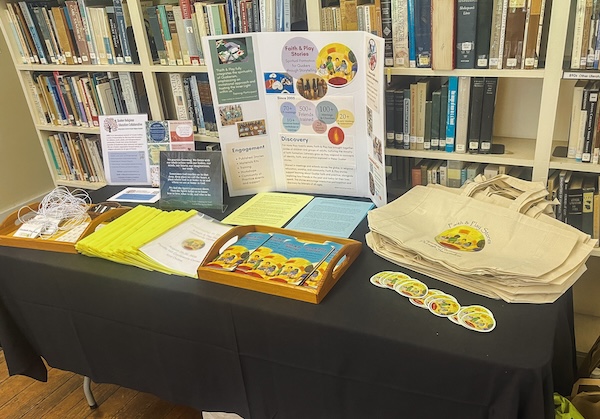
At Haverford Meeting, a Friend Shares on Faith & Play and Multigenerational Learning
Erin Lehman serves on the planning committee for the Learning for Life – A Religious Education Thread Gathering. She is a member of Haverford Friends Meeting and is involved in religious education there, including Faith & Play.
“I want people to know the Thread Gathering is not just for families with kids,” Erin said. “It’s about all of us learning more about Quakerism.”
This April with the Programs and Religious Life Team and Grant Opportunities to Know
The Programs and Religious Life Team has an abundant month of gatherings ahead, and they invite all to participate this April! [Read more…] about This April with the Programs and Religious Life Team and Grant Opportunities to Know
Program & Religious Life | A Year in Review
Hello Friends,
How has spirit moved among us in 2024? As we, the staff of PYM’s Program and Religious Life Department, reflect on this question, we have many joyful tidings to share.
The Big Picture
This year we saw many examples on how being a part of the Philadelphia Yearly Meeting community gives Friends a place to share their gifts and ask for support in times of need. This flow of sharing and receiving is a core part of what it means to be “part of the body.” Our PYM programs create spaces of joy, learning, spiritual nurture, and concrete resources. And none of it would be possible without Friends like you sharing their gifts, showing up, participating, and building community together. Thank you!
Read on to hear more about the programs and events we’re proud of this year.
[Read more…] about Program & Religious Life | A Year in Review
Talking about the Election with Children and Youth
Authorship is credited to Melinda Wenner Bradley (West Chester Meeting), Quaker Religious Education Collaborative
The intensity of the election cycle is an experience both for adults and for the children and youth in our families and communities. Depending on their age, preschoolers to teens may be aware of the anxiety in the adults around them — and experiencing their own anxiety about the outcome of the election in November.
[Read more…] about Talking about the Election with Children and Youth
Friends Counseling Service: Key Questions Answered for Accessible Mental Health Care
The Friends Counseling Service (FCS) serves members and attenders of Philadelphia Yearly Meeting (PYM) who are in search for guidance, comfort, and assistance. This service offers accessible mental health care to Friends across PYM with counselors providing individual therapy, couples counseling, and family therapy sessions. We connected with Janaki Spickard Keeler, Friends Counseling Service Coordinator, who provided additional insight into the service by answering some key questions.
Religious Education Resources & Events Fall 2024
Summer is waning, the crickets are singing, and it’s time to get ready for the next year in religious education programs! The Fall issue of The Tote Bag: Religious Education and Family Resources is here to support getting ready for children, youth, and intergenerational programs in meetings. This includes new resources to support middle school engagement, explore Bible stories with children, and how to talk together with young people about election issues. With the upcoming election in November, staff have been thinking about how to support families and young people to feel grounded in our testimonies of integrity and peace. Two specific events for adults and children/youth are happening this fall. Read on!
[Read more…] about Religious Education Resources & Events Fall 2024
Supporting Children and Teens After Violence in the News
How do we talk to children and adolescents about gun violence and senseless tragedy? Parents and caregivers are helping their children process their feelings alongside their own, and signs of anxiety are different in children and adolescents when compared with adults. Pastoral care for children begins with pastoral care for their caregivers, and the resources below are offered to support parents and caregivers, educators, and Friends who care for and work with youth. A concern about election violence led to the creation of this event in October for families — Peace Begins with You: A Gathering for Children & Families — and we hope you will share this community gathering and the resources below with your meeting.
Processing in Developmentally Appropriate Ways
Children and teens will have different exposure to and understanding of violent incidents, and may feel anxiety, confusion, fear, sadness, or anger, and have questions about what they see and hear in the media and from friends. Children cannot always articulate their feelings, and they may show us how they are feeling through play or behaviors. Their anxiety may show up as: anger, negativity, difficulty sleeping (particularly falling asleep), defiance, and lack of focus. For adolescent youth, symptoms of anxiety may include recurring fears and worries about routine parts of everyday life, irritability, trouble concentrating, withdrawal, and complaints about stomachaches or headaches.
* Some practical advice for parents and caregivers
- Parents and adults need to first deal with and assess their own responses to crisis and stress.
- In PYM, adults seeking support can reach out to the Friends Counseling Service.
- Try and keep routines as normal as possible. Children gain security from the predictability of routine, including attending school.
- Be present. Listen to your children’s fears and concerns.
- Depending on their age, limit exposure to television and the news but be honest with kids and share with them as much information as they are developmentally able to handle with simple, honest answers.
- Reassure kids that the world is a good place to be (individuals are responsible for violent actions).
- Reaffirm attachments and relationships.
Resources for Adults Supporting Children and Teens
- Spiritual Practices for Use During a Traumatic News Event from Traci Smith
- Talking to Children About Gun Violence from Everytown for Gun Safety
- Talking to young children about community violence from Sesame Workshop
- Talking to Children About Violence: Tips for Families and Educators from the National Association of School Psychologists
- Helping your children manage distress in the aftermath of a shooting from the American Psychological Association
- Isaiah and the Worry Pack — Learning to Trust God with All Our Fears by Ruth Goring
- A Kids Book About Anxiety by Ross Szabo from the “A Kids Book About” series. The inside covers suggests, ”This book is best read together, grownup and kid.”
Making Faithful Practices Available
Children need us to hear their concerns, and we can provide reassurance even if we do not have answers. Lifting up our worry and anxiety in prayer is another way to acknowledge those feelings and place them in the care of our Quaker faith. These coloring pages “Prayers For When You Feel Anxious” includes both suggested prayers and three different sets of images for mindful coloring. This lesson plan about meeting for worship suggests that our worship as Friends is a container that is strong enough to hold big feelings —even hard ones—and the lesson could be adapted to help process recent events and heavy hearts, alongside encouragement to continue finding the Light in our world.
Election Violence Prevention: Youth Programs
- For shepherd people (gifted in leading or organizing groups): Create or visit a youth forum, small or large, of teens and young adults. Support them in learning about and actively practicing nonviolent strategies for the political changes that they want to see.
- For relationship people (folks who are good at conversations and making friends): Ask some young people for their thoughts about the upcoming election cycle. Engage in conversation. What do they believe is likely to happen? How does that feel? Do they have concerns? Do they have ideas for action?
- For word people (talented writers and/or speakers): See if you can find a high school or university class or club to which you can speak about the election cycle and ways to engage in political change nonviolently.
- For prayer people (spiritual grounded intercessors): Pray for young people in particular throughout the election cycle. When the opportunity arises, invite young people you know to pray actively for nonviolence.
- For motion people (naturally physically active doers): Consider holding a sports tournament on a Saturday or several weekends in a row. During breaks and over snacks, talk about the election cycle and the influence young people can have on nonviolence in their communities.
- For learning people (research ninjas and data analyzers): Find out what, if anything, your local schools are teaching in terms of voter and civic education.
- For creative people (artists, musicians, performers, and crafters): Find an opportunity to hold a creative workshop of some sort for young people, either by organizing a group or by being a guest artist for an existing group. Use election violence prevention as your theme.
Image: Pixabay.com